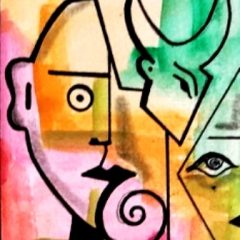
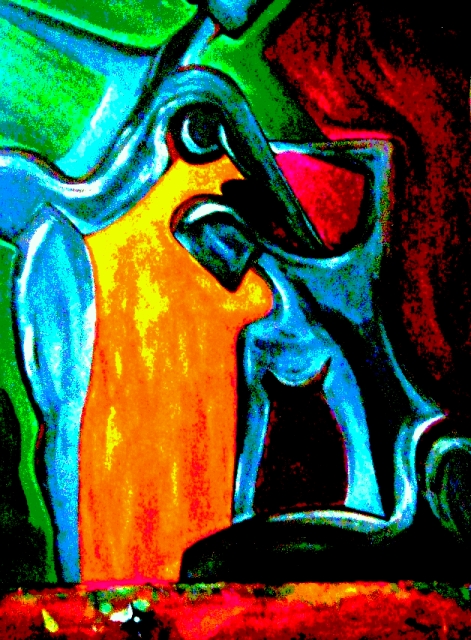
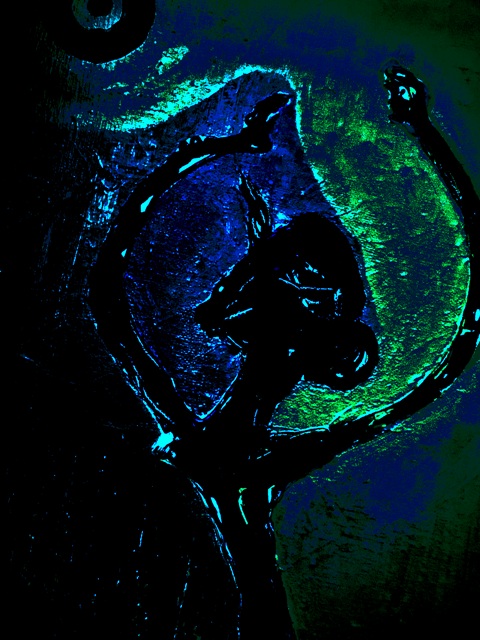
René Magritte, el gran pintor surrealista, dijo una vez: «La mente ama lo desconocido. Ama las imágenes cuyo significado es desconocido, ya que el significado de la mente misma es desconocido.» Y aunque no era un expresionista, per se, lo que dijo se lo añado al expresionismo porque el expresionismo busca representar imágenes cuyo significado es desconocido. Esa es la esencia del expresionismo. Estoy completamente de acuerdo en que la mente es un misterio y que ama símbolos, imágenes y todo lo relacionado con misterios. Los expresionistas no buscan reproducir la vida, sino crearla en el lienzo con pintura.
Van Gogh podría haber sido el Padre del Expresionismo en la pintura. Él aportó gran energía y emoción en sus obras, algo que los expresionistas también buscan hacer. En la música expresionista, se puede decir que Arnold Schönberg es el Padre de la Música Expresionista. Comprendió la profundidad de los sentimientos y la búsqueda interna del artista, quien busca plasmar una expresión de la realidad que pocos pueden entender. Así dijo: «Si es arte, no es para todos, y si es para todos, entonces no es arte.» Y creo que captó el verdadero significado del expresionismo en todas las formas de arte.
Dentro del Expresionismo podemos encontrar el Surrealismo, el Simbolismo, el Futurismo, el Fauvismo, el Cubismo, el Vorticismo y el Dadaísmo. Todos estos, que se consideran entre las muchas vanguardias del arte del siglo XX, se sublevan contra los parámetros establecidos en el Impresionismo y el Postimpresionismo. Fue arte que surgió del resentimiento y la tragedia, ya que los expresionistas originales lucharon contra los peligros y los horrores de su mundo, que estaba mayormente enredado en guerras mundiales. Por lo tanto, la necesidad de expresar mundos ocultos y secretos se convirtió en la motivación, y fue el catalizador que permitió la creación de sus obras maestras.
Entre los muchos expresionistas que admiro se encuentran los pintores: Edward Munch, Otto Dix, Egon Schiele, Oskar Kokoschka y Gabriele Münter. En el ámbito de la música, grandes compositores expresionistas son Arnold Schoenberg, Anton Webern, Alban Berg, Paul Hindemith, Igor Stravinsky y Alexander Scriabin. En el cine, podemos encontrar películas expresionistas como El Gabinete del Dr. Caligari (1920), De la Aurora a la Medianoche (1920), Destino (1921) y Nosferatu (1922). Y, por supuesto, tenemos escritores como Kafka y filósofos como Hume, Bergson, Nietzsche, Proust y Kant. Todos buscaron dignificar e envigorizar al Nuevo Hombre y rechazar los principios anteriores, en su mayoría ligados a la sociedad anterior al siglo XX.
+++
René Magritte, the great surrealist painter once said: «The mind loves the unknown. It loves images whose meaning is unknown, since the meaning of the mind itself is unknown.» And although he was not an expressionist, I can certainly add that statement to expressionism because representing images whose meaning is unknown is the essence of expressionism. I agree wholeheartedly that the mind is a mystery and that it loves symbols, images and everything concerning other mysteries. Expressionists seek not to reproduce life but to create it in the canvas with paint…
Van Gogh could well have been the Father of Expressionism in painting. He brought forth great energy and emotion in his paintings and this is something that expressionists seek as well. In expressionist music, one can say that Arnold Schönberg is the Father of Expressionist Music. He understood the depth of feeling and the internal quest of the artist as he seeks to bring forth an expression of reality that few can understand. So he said: «If it is art, it is not for all, and if it is for all, then it is not art.» And I think he captured the true meaning of expressionism in all manners of art.
Within Expressionism we can find Surrealism, Symbolism, Futurism, Fauvism, Cubism, Vorticism, and Dadaism. All of these, which are some of the vanguards of XXth Century art, are a revolt against the parameters set in Impressionism and post-Impressionism. It was art that grew out of resentment and tragedy as the original expressionists battled the dangers and the horrors of their world which was mostly entangled in world wars. Therefore the need to express hidden and secret worlds became the motivation, the catalyst that allowed for the creation of their masterworks.
Among the many expressionists that I admire are painters like Edward Munch, Otto Dix, Egon Schiele, Oskar Kokoschka and Gabriele Münter. In the field of music great expressionist composers are Arnold Schoenberg, Anton Webern, Alban Berg, Paul Hindemith, Igor Stravinsky and Alexander Scriabin. In the cinema we can find expressionist films like, The Cabinet of Dr. Caligari (1920), From Morn to Midnight (1920), Destiny (1921), and Nosferatu (1922). And of course you have writers, like Kafka and philosophers, like Hume, Bergson, Nietzsche, Proust, and Kant. All sought to dignify and invigorate the New Man and reject the previous principles mostly tied to pre XXth Century society.
+++
GRACIAS – CHEERS

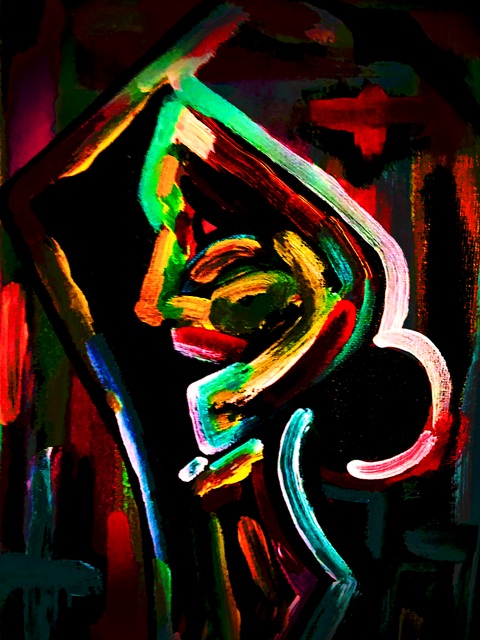


 JaZzArt en València