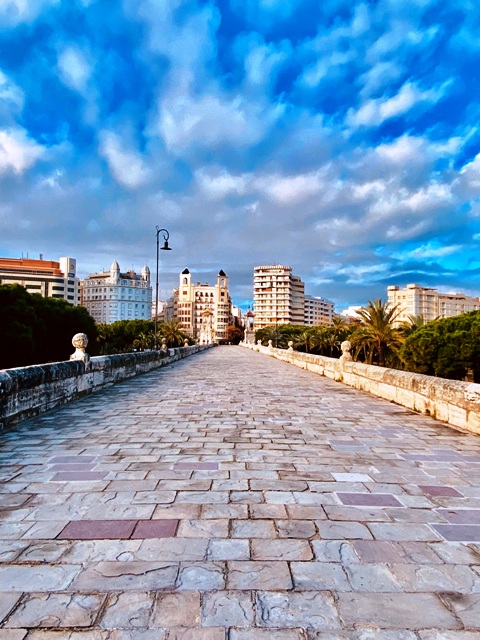
Hi ha alguna cosa especial en aquests carrers quan al matí d’hora contemplen el cel sense ningú per ells caminant…
MOLTES GRÀCIES
MERCI
GRACAIS
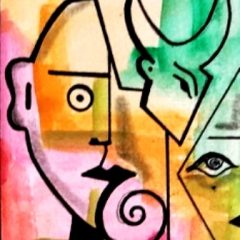
Faith saved us from the savages that we were, losing faith makes us savages again
Hi ha alguna cosa especial en aquests carrers quan al matí d’hora contemplen el cel sense ningú per ells caminant…
MOLTES GRÀCIES
MERCI
GRACAIS
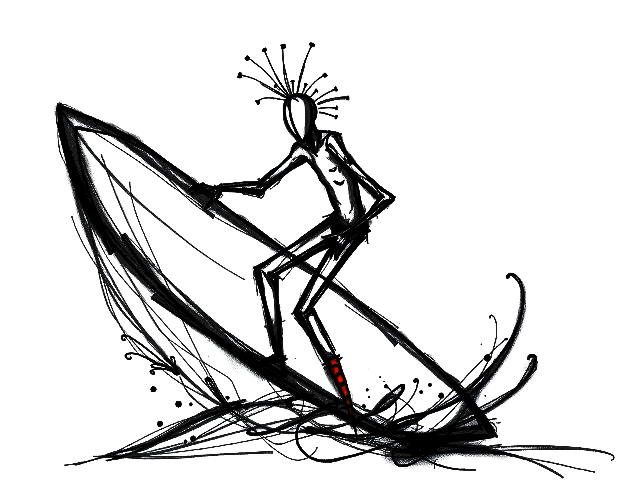
Mi poema «Surfeando con carlotas» ha sido nominado en Spillwords Press para el premio de mejor poema internacional y necesito vuestros votos para ganar. Os agradezco grandemente el apoyo.
MUCHAS GRACIAS
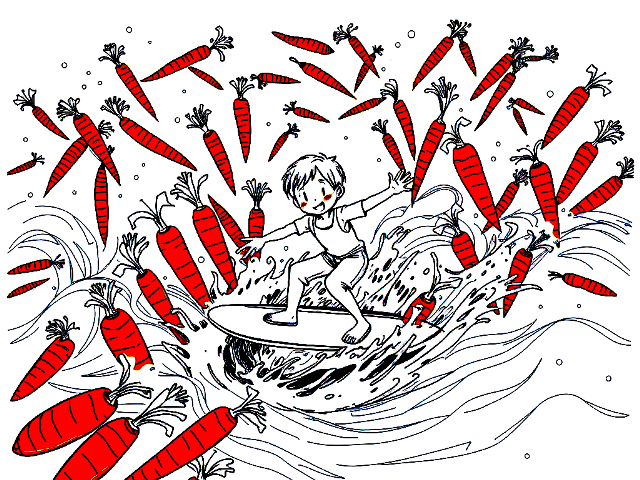
My poem «Surfeando con carlotas» has been nominated for Publication of the Year (international)! With your help it can win.
AND…
Thank you so much!

FOOTSTEPS ON THE SAND
From the bottom
of the deepest ocean,
a tenor’s voice defeats the orchestra,
survives the pressure and currents of the deep
and rises to a sandy beach and walks along the sand.
Faith has its own groove rhythmic,
free from church, free from bells.
I’m a lover of God
as you can tell.
I hear the tides,
they’re singing.
I hear the water,
each tiny wave
trying to follow,
learning the words
humming along.
It’s not a miracle, it’s life…
From the depths you rise,
to the heavens you’ll soar,
Relax,
if you’re afraid to fly,
you can climb a staircase to the stars.
It’s time to nurture your soul…
The day whispers his secrets to the night as she approaches.
The night whispers her secrets to the morning.
The sun is rising,
The light dividing night from day is moving east,
but a line never begins where one had ended,
the snake its tail to bite pretended…
A sigh is heard from high above the clouds,
the mountains hold their breath
and strain their ears to listen,
and He lets it be,
and His voice is louder than thunder.
And as the peace of a quiet dream
turns into one loud primal scream,
the Earth exhales,
the Universe can breathe.
The footsteps on the beach
were left
by me.
Mi poema «Surfeando con carlotas» ha sido nominado en Spillwords Press para el premio de mejor poema internacional y necesito vuestros votos para ganar. Os agradezco grandemente el apoyo.
MUCHAS GRACIAS
My poem «Surfeando con carlotas» has been nominated for Publication of the Year (international)! With your help it can win.
AND…
Thank you so much!
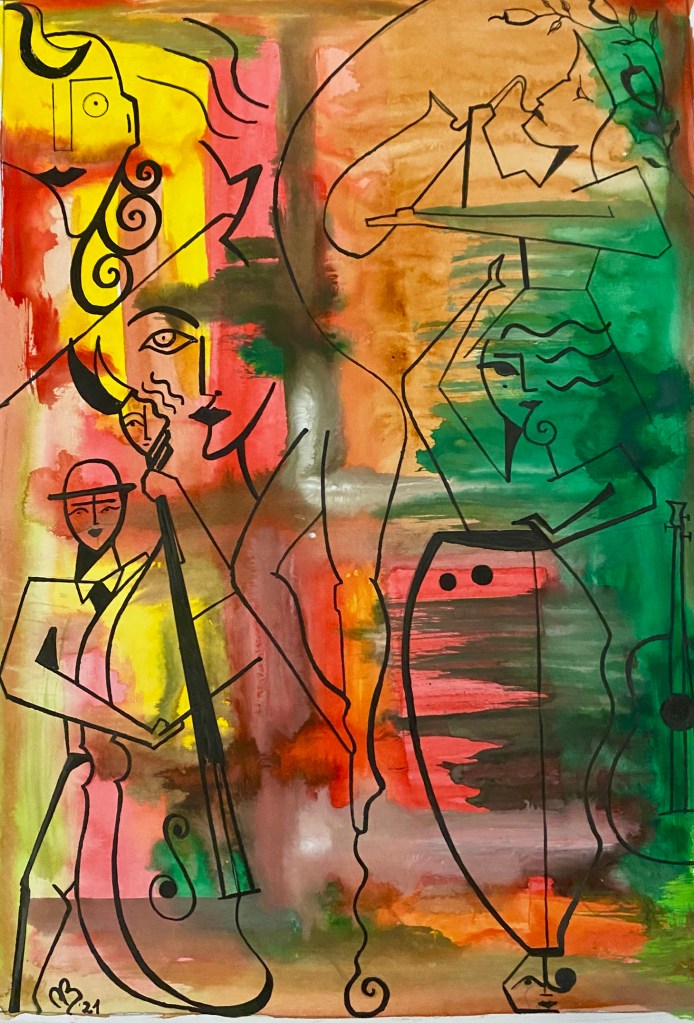
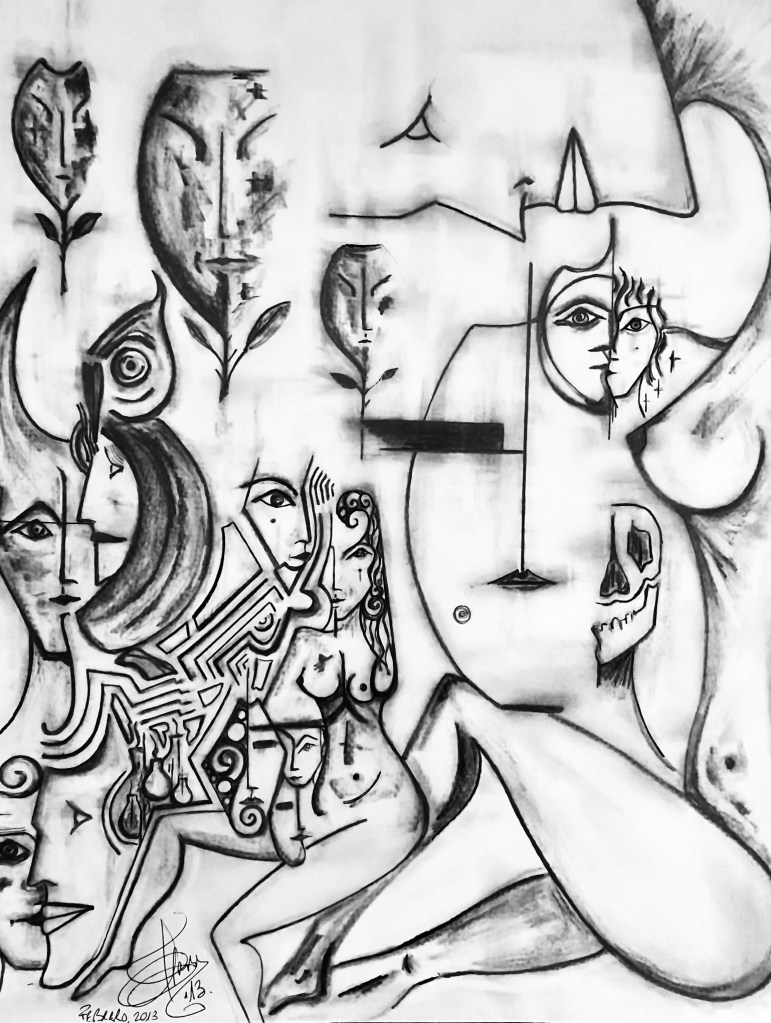
I call my drawings, and many of my paintings, «JaZzArT» because they dance…
Jazz music follows three basic «rules» which are: Improvisation, the player (soloist) as composer and swing. I try to do the same within my artwork. But how do I accomplish it? I’ll tell you…
First, I start by imagining the composition, in other words, visualising it vividly in full detail as I listen to some jazzy tunes; I begin to sketch to the music, following the rhythm and the nuances of the melody; I allow the sketch to «climb up to the canvas» in colours that resemble the chords and the harmonies that I am listening to; then I improvise instead of simply copying the sketch and I let my «soloist» (usually one of the figures within the composition) to lead me on, to tell me the colour, to compose a bit; then I balance the colour wheel within the composition so that it can dance…
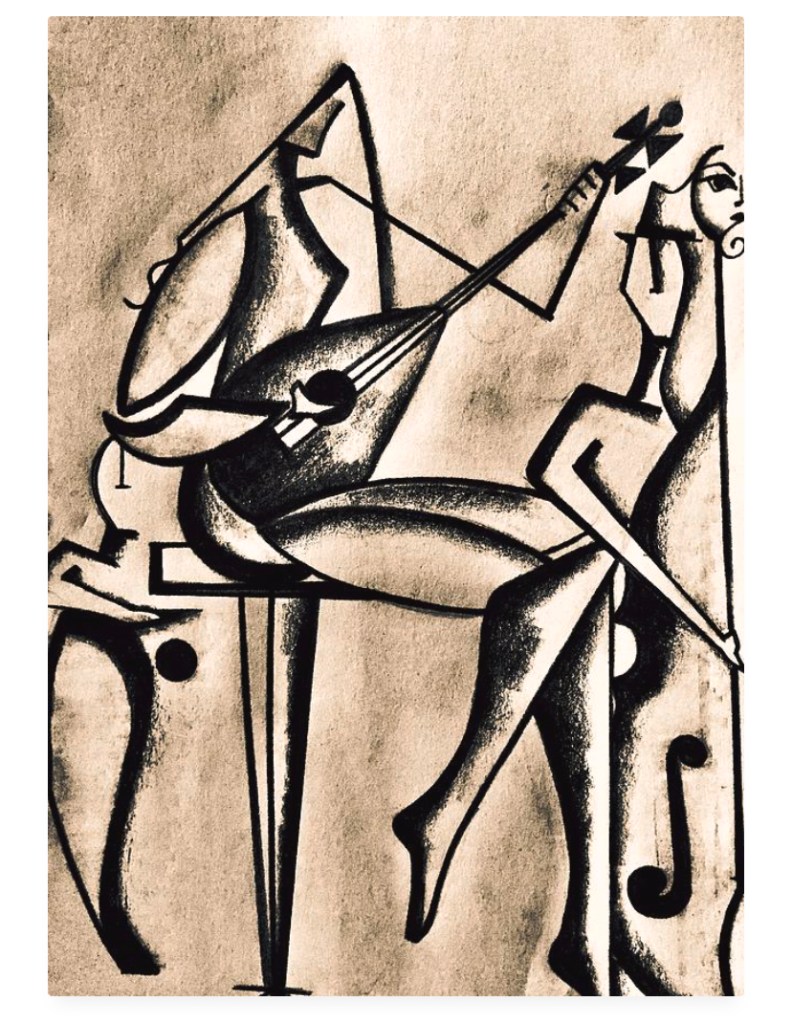
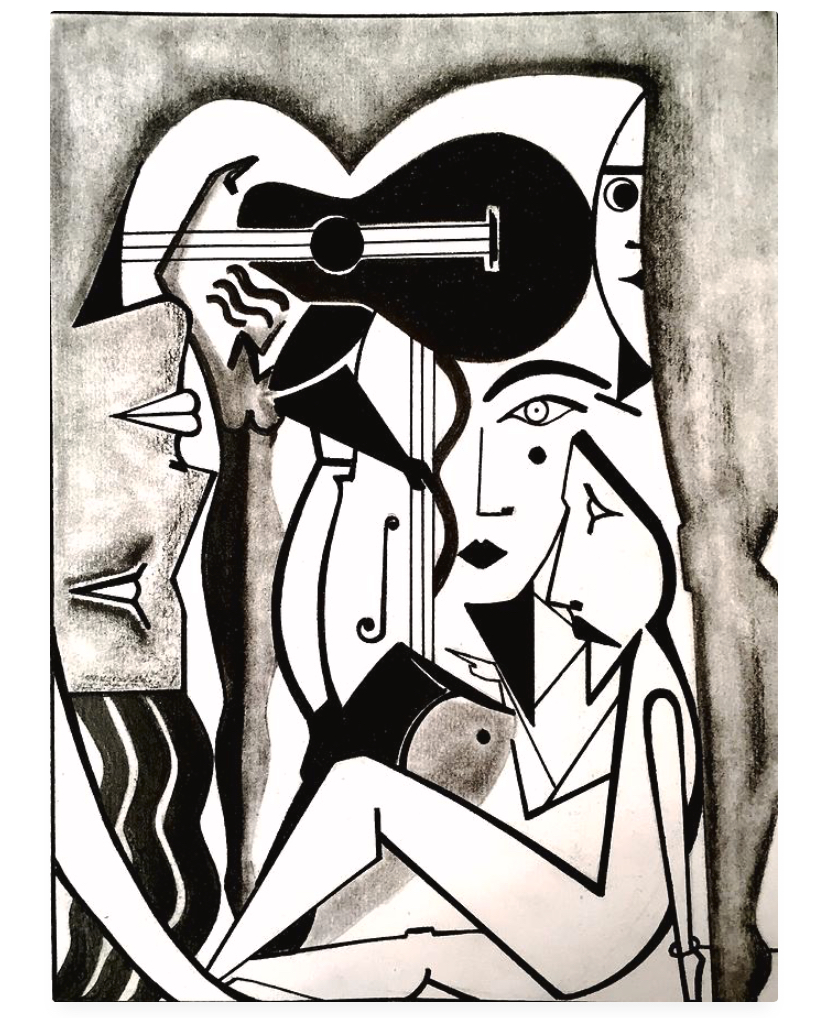
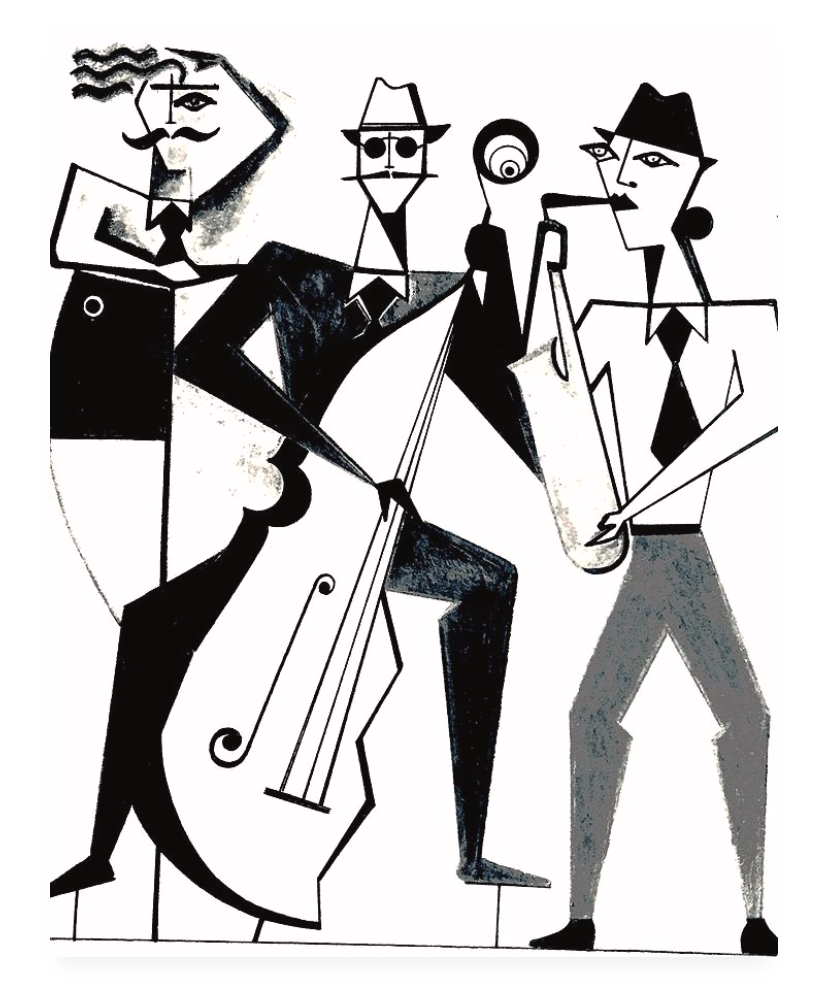
Here are some examples of JaZzArT drawings…


CHEERS
Francisco Bravo Cabrera, a.k.a. Bodo Vespaciano
What can I say about myself? Well… I am a graduate of Florida International University (located in Miami, Florida). I have been engaged in the art world since 1998 when I began painting and selling watercolours which I titled simply “Jazz-Art”, mainly because of my love of Jazz music and because of the themes of the compositions. I created his studio, Omnia Caelum Studios in Miami where I lived at the time. Presently I live and paint and write in València, Spain.
My first professional gallery exhibition was in 2003 at the PG Gallery in Istanbul, Turkey. Following the success of this show, I returned to Miami and began exhibiting in galleries there and in Sarasota and Bradenton, Florida, as well. In Miami, I was named “Artist of the Month” several times during my participation in Miami’s “Cultural Fridays” programme.
I have exhibited in Sarasota and Bradenton, Florida; Manhattan and Brooklyn, New York; Zaragoza, Barcelona, Valencia, Palma de Mallorca, and Sevilla, Spain, Belfast in Ireland, and again in Turkey, this time in Izmir. Apart from galleries my paintings hang in many private collections throughout Europe, the United States, Taiwan and Turkey.
My unique style for painting is surreal-expressionism, but I do not not limit myself to just one style or approach. Most of my paintings are on musical themes and I use instruments as well as bodies to represent players and dancers which exist in the world of jazz and fantasy I am creating. I use colours boldly to express feelings and emotions, and many times I paint an abstract background to my figurative paintings. However, being that I believe that art is the “search” I continuously experiment and investigate new and different approaches to be able to create paintings that truly communicate and transmit the message that I wish to share.
Besides my figurative work, I have developed a way to approach abstract art thinking it something spiritual, and almost mystical. Another very important aspect of my work is drawings, (illustration), which I do using various types of graphite and ink. These I do in series titled “JaZzArt”. The series is separated into phases. And although most are in black and white, some I have drawn with ink upon a colourful abstract background of watercolour. So, are these paintings? Or drawings? You tell me…
My present work seeks to expand the use of colour, as well as to explore other styles. This would allow me the use of more symbols and abstract forms. I am looking to continuously delve deeper and deeper into expressionism. My “search” is to discover the true essence of this historical/vanguard art movement and to try to more clearly and effectively reach out and communicate with its audience. And of course to continue drawing JaZzArt because for me the black line is the clearest and most visual manner with which to bring forth the spirituality…and communicative power…of art.
My upcoming projects continue to be here in my hometown, València, Spain. But I also do a lot of work and sell much on Internet. Next year I will be back…October 2025…at the museum Sala d’Exposicions de Ciutat Vella (València) where, in 2023, I was so successful with my premiere Valencia exhibition «Atrévete» («Be Bold»).
CHEERS
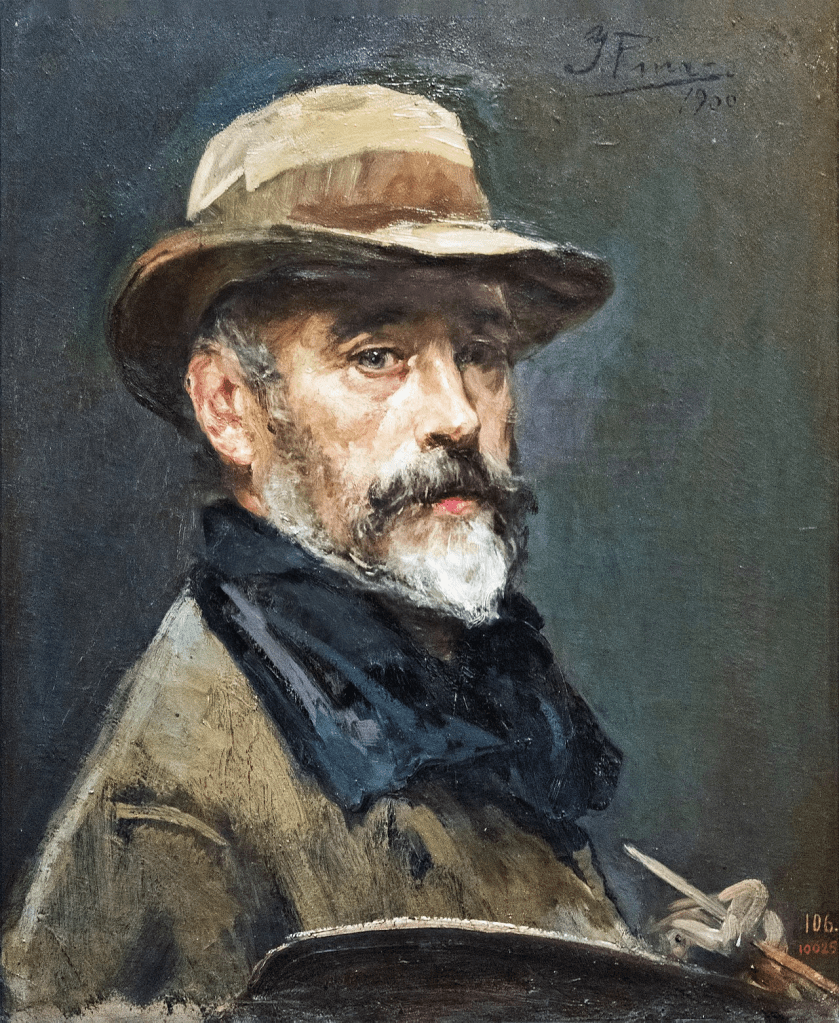
Uno de los nuestros y de los grandes… Ignacio Pinazo Camarlench nació en Valencia en 1849 y murió en 1916. Surge de familia humilde y comenzó sus estudios en la Academia de Bellas Artes de San Carlos de Valencia en 1864 y se ganaba la vida de sombrerero. Luego en 1871 logró su primera exposición en la Exposición Nacional de Bellas Artes. Sus primeras obras no fueron totalmente de genero, aunque si academistas, pero Camarlench siempre fue buscando algo diferente y se nota. Pasó hacia el impresionismo en 1874 siguiendo los pasos de Sorolla y de otros pintores españoles como Francisco Domingo Marqués… Ignacio fue profesor de Bellas Artes en la Escuela de Valencia y en 1896 fue nombrado como académico en la Escuela de Bellas Artes de San Carlos de Valencia… Fue un gran retratista, ganador de la medalla de la exposición nacional (1897). Uno de sus retratos famosos fue el de su majestad Don Alfonso XIII. Fue nombrado académico de la Real Academia de Bellas Artes de San Fernando de Valencia (1912)… Aunque se le conoce como un impresionista, su obra tiene mucho mas ya que él incorpora aspectos del naturalismo y también mucha psicología y emoción en su obra. Si uno se fija bien verá que en los espacios negativos de muchos de sus lienzos hay también mucha arte abstracta… El Museo del Prado tiene muchas obras de este gran pintor valenciano.
+++
One of our own (Valencian) and one of the greats… Ignacio Pinazo Camarlench was born in Valencia in 1849 and died in 1916. He came from a humble family and began his studies at the Academy of Fine Arts of San Carlos in Valencia in 1864 while making a living as a hat maker. In 1871, he achieved his first exhibition at the National Exhibition of Fine Arts. His early works were not strictly of the popular genre at the time, though they were academic. But Camarlench was always searching for something different, and it showed. He moved towards Impressionism in 1874, following in the footsteps of Sorolla and other Spanish painters like Francisco Domingo Marqués… Ignacio was a professor of Fine Arts at the Valencia School and in 1896, he was appointed as an academic at the School of Fine Arts of San Carlos in Valencia… He was a great portraitist, winning the gold medal at the national exhibition (1897). One of his famous portraits was that of His Majesty King Alfonso XIII. He was named an academic at the Royal Academy of Fine Arts of San Fernando in Valencia (1912)… Although he is known as an Impressionist, his work encompasses much more as he incorporates aspects of naturalism as well as a great deal of psychological aspects and emotion into his work. If one looks closely, they will see that in the negative spaces of many of his canvases, there is also a great deal of abstract art… The Prado Museum houses many works by this great Valencian painter.
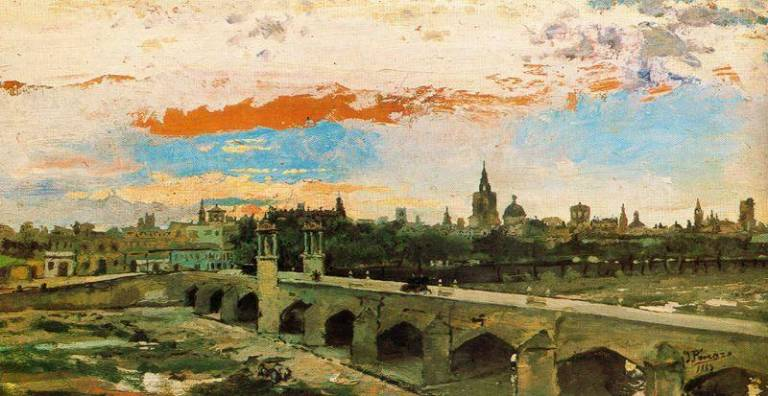
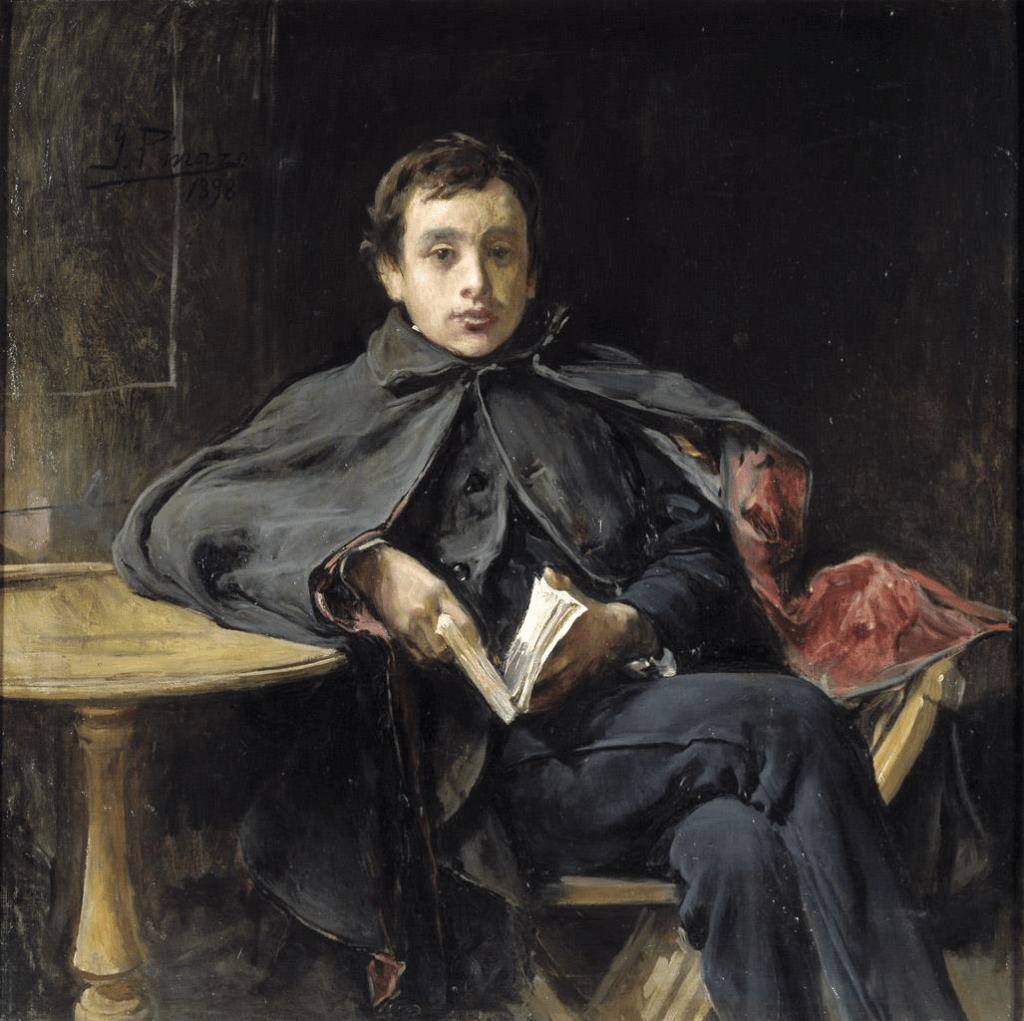
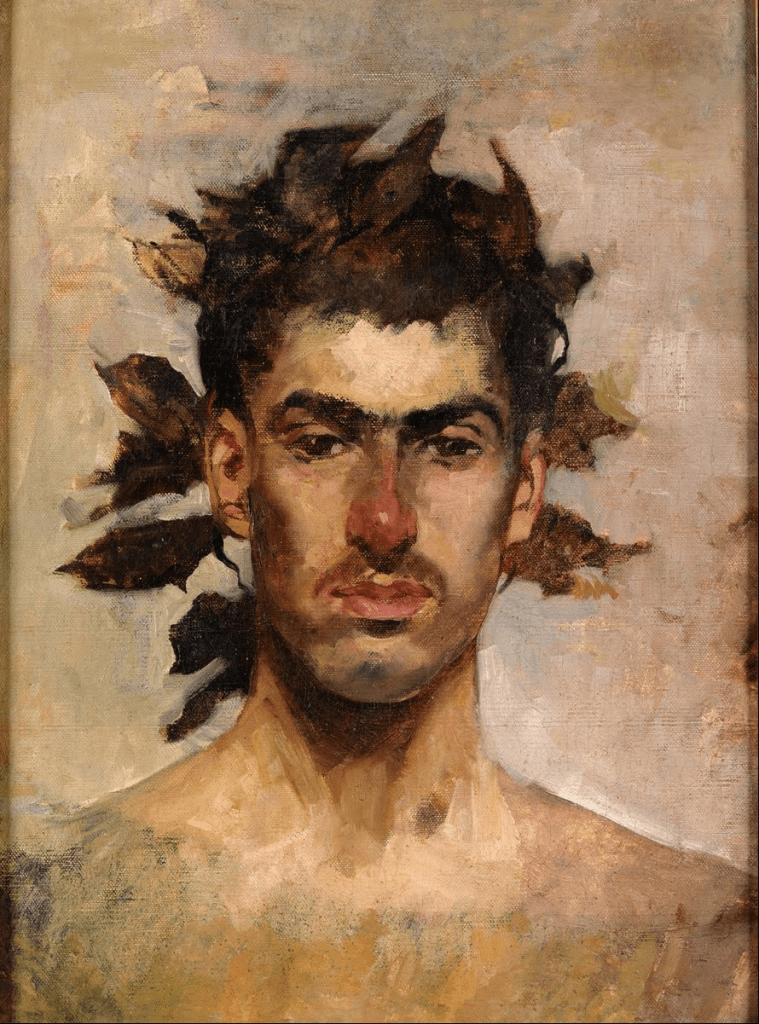
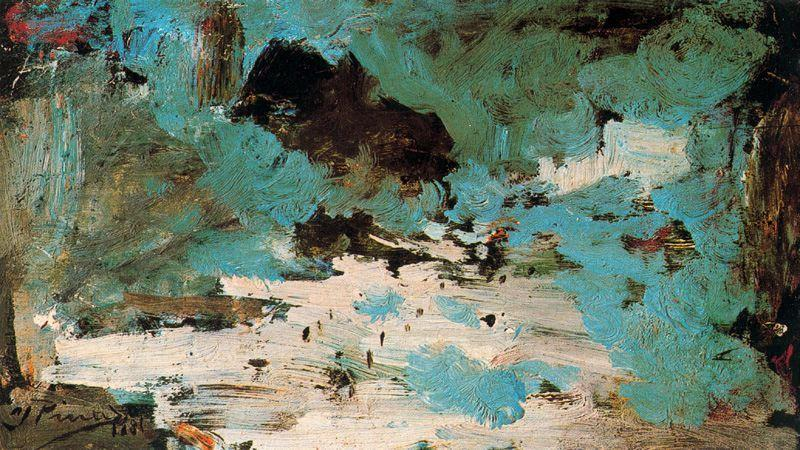
Este pintor no tiene desperdicio y os urjo a que busquéis mas sobre Ignacio Pinazo Camarlech.
+
This painter is phenomenal and I truly urge you to look further into the work of Ignacio Pinazo Camerlech, I know you will be delighted at what you will find.
GRACIAS – CHEERS
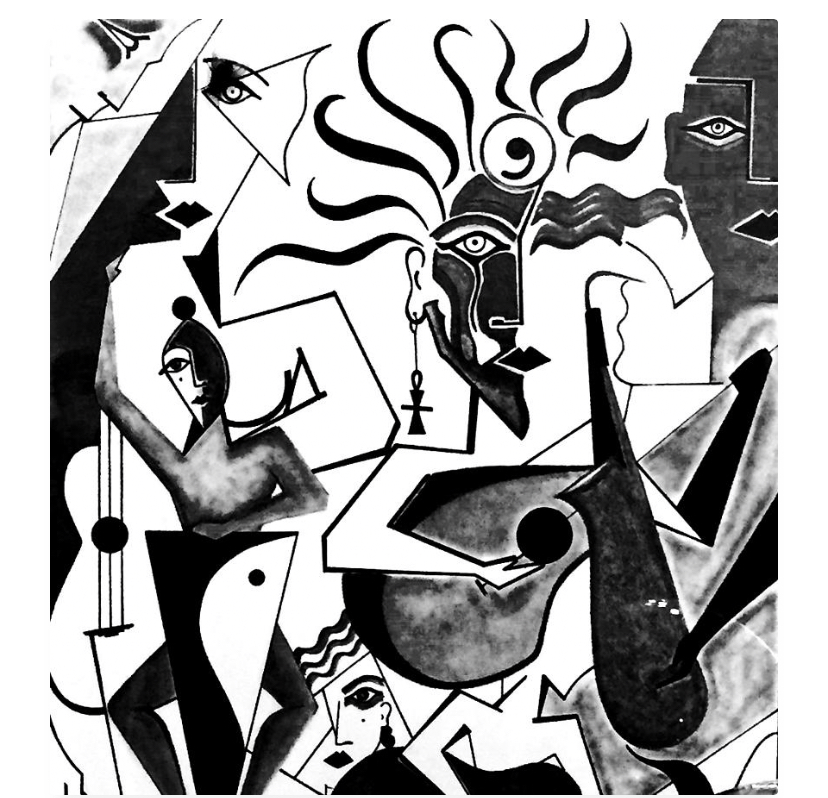
JaZzArT is a concept I developed…slowly…towards the end of 2016 while working in South Florida. The idea was for me to use the thought/methodology that goes into making jazz music to paint, draw and create works of visual art. But how does one do that? Music is art but it is quite different from painting or drawing. But there is still a way…
I use improvisation, rhythm and creating as the protagonist wills it so, to create my drawings. And it all started in black and white. Improvisation is not the same as intuitiveness. Improvs are planned and rehearsed. Rhythm is a force of nature that leads us with every breath we take and every beat of our hearts. And letting the player compose as he plays, wow! That is making art!
ENJOY!


CHEERS

 JaZzArt en València