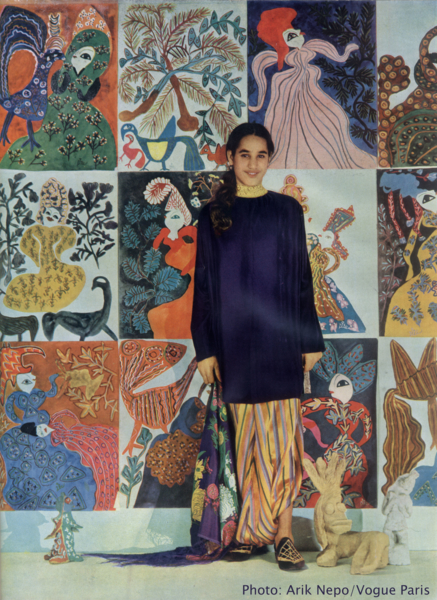
Baya Mahieddine, known in the art world as Baya, was born in Bordj El Kiffan, Algiers in 1931. She was an artist celebrated for her quite vibrant, dreamlike paintings that blend elements of folk art, fantasy, and North African culture. She began painting as a teenager and gained international recognition at just 16 years old when she held her first solo exhibition in Paris in 1947, curated by the influential French art dealer Aimé Maeght.
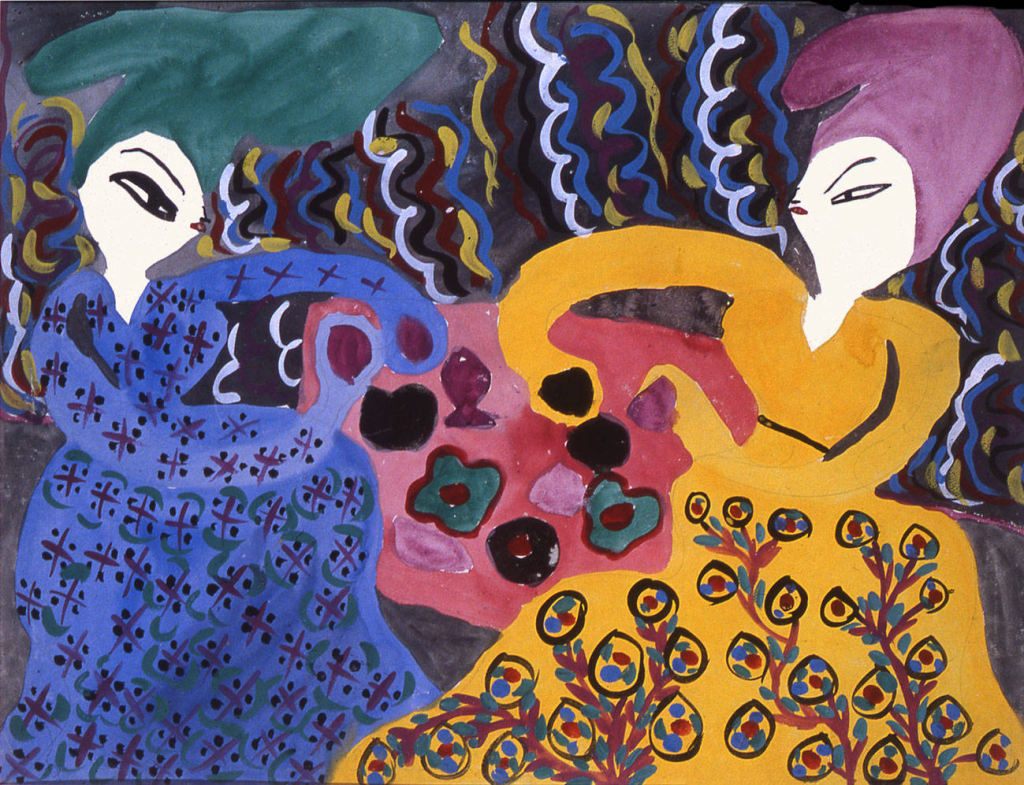
André Breton, the «Father of Surrealism» was a bit captivated by Baya’s paintings and thought that she was truly creating a pure form of Surrealism. Yet she did not become formally associated with the Surrealists or with any other art movement. Her compositions are very colourful and depict women in lush, decorative environments, surrounded by birds, plants, and musical instruments. Her paintings then evoke themes of femininity, freedom, and joy. Despite their apparent innocence, her works carry an undercurrent of resilience and cultural identity, reflecting her experiences growing up in French-colonized Algeria.
During her marriage to the musician El Hadj Mahfoud Mahieddine, Baya took a break from art and painting. She returned to her art in the 1960s and continued to exhibit her work in Algeria and abroad until her death.
Today, although not in most art schools at uni, Baya is recognized as a pioneering figure in modern North African art. Her legacy continues to inspire generations of artists, especially women working within postcolonial and diasporic contexts. She is a female artist, successful and recognised that we all must come to know better and appreciate more. Baya died in Algeria in 1998.
Here are some of her works…


CHEERS
We invite you to follow us on social media:
YouTube: http://www.YouTube.com/@FranciscoBravoCabrera
Instagram: @Francisco_Bravo_Cabrera
X: @Euskadi_Bakero
Artist Representative: «By Guloshka»
E-Mail: guloshka404@gmail.com
Instagram: @guloshka
 JaZzArt en València
What a wonderful and illuminating tribute to Baya Mahieddine! 🌟
You’ve beautifully captured not only the brilliance of her colours and compositions but also the deeper strength and cultural pride woven through her work. I love how you frame her paintings as more than decorative — they’re celebrations of femininity, freedom, and joy, while quietly carrying stories of resilience and postcolonial identity.
Me gustaLe gusta a 1 persona